
History Trunks


What’s inside the trunks?
Documents inside of the History Trunks
- Revolutionary War Map Poster
- Weapons of the American Revolution Poster
- Patriots vs Loyalists Poster
- Flags of the American Revolution Poster
- Leather Folder Containing:
- Manumission Documents –Manumission documents were special papers freeing an enslaved individual. Formerly enslaved would carry this official document as proof of their freedom.
- Fife and Drum Sheet Music – Fife and drum sheet music is a set of written notes that tell musicians what to play on fifes and drums. During the American Revolution, soldiers used it to learn songs that helped them march in time and follow commands in battle. (See below for example)
- Spirit of 76 Painting – Painted by Archibald Willard in 1875, The ‘Spirit of ’76’ is a famous painting that shows three soldiers from the American Revolution—one playing a drum, one a fife, and one marching. It reminds people of courage, freedom, and how Americans worked together to fight for independence. (See below for example)
- British Soldiers Uniform Image
- Colonial Map
- Women’s Clothing Book
- Men’s Clothing Book
- Colonial Recipes Book
- 1775 Map of NC/SC with American Indian Frontiers
- Battlefields of the American Revolution Stamp – These stamps show important battlefields from the American Revolution. People used them to send letters, and the pictures helped everyone remember the places where soldiers fought for freedom.
- American Revolution Artwork
-
Playing Cards – Used for games and fun during free time. The reverse side of each card shows the printing tax seal. Any paper printed in America was taxed, which contributed to the Taxation Without Representation Movement.
Manumission Documents


Duke University Libraries, Manumission document, American Slavery Documents, Document ASDSI001042, Duke University Digital Repository, https://repository.duke.edu/dc/americanslaverydocs/asdsi001042
Fife and Drum by John G. Barr


- Composed by John G. Barr and published by H.W. Gray (1991) as part of the collection Four Christmas Pieces, Fife and Drum is a lively organ arrangement inspired by the traditional carol “Patapan.”
-
This spirited piece captures the rhythmic energy of early fife and drum bands, blending a sense of martial precision with festive cheer. Its driving tempo and bright tonal colors make it an ideal selection for holiday concerts, church services, or recital performances, offering a bold, celebratory sound that fills the space with movement and joy.
Barr’s work beautifully bridges two musical traditions — the historic military band style and the organ recital repertoire — creating a performance piece that feels both timeless and familiar. Through its use of the beloved Patapan melody, Fife and Drum connects audiences to the pageantry and spirit of seasonal celebration.
Spirit of '76 Painting by Archibald Willard

Painted by Archibald MacNeal Willard in 1875–1876, The Spirit of ’76 is one of the most recognizable patriotic images in American history. Originally titled Yankee Doodle, the artwork was created for the 1876 U.S. Centennial Exhibition in Philadelphia and quickly captured the imagination of a nation celebrating its 100th year of independence.
The painting portrays three musicians—a young drummer, an older drummer, and a fifer—marching resolutely across a Revolutionary War battlefield as the American flag waves behind them. Their expressions and movement evoke courage, unity, and the enduring spirit of freedom. Although inspired by the American Revolution, Willard based the scene partly on a Fourth of July parade in his hometown of Wellington, Ohio, giving it both historical and emotional depth.
Willard’s own father served as the model for the central drummer, while other local figures posed for the remaining characters. Originally meant to be lighthearted, the painting took on a more solemn tone after his father’s death during its creation.
Since its debut, The Spirit of ’76 has become a lasting symbol of American resilience and patriotism. The original painting is displayed at Abbot Hall in Marblehead, Massachusetts, with several other versions held in Cleveland collections. Reproduced countless times in prints, stamps, and posters, it continues to embody the energy and determination of the Revolutionary era.
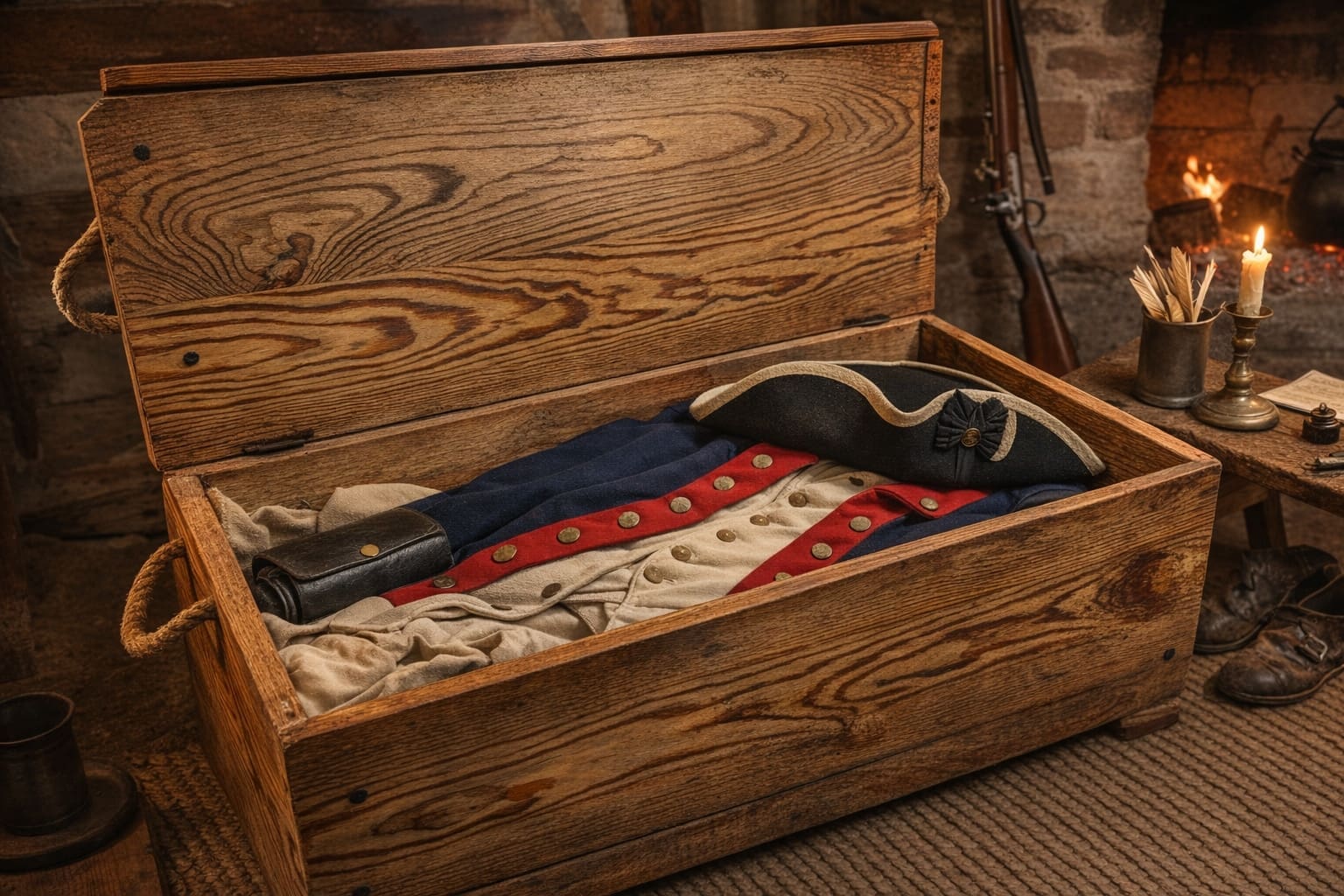
US Patriot Continental Soldiers Uniform
- Men’s Revolutionary War Coat – This long jacket was worn by soldiers. It helped keep them warm and showed which army they belonged to. The colors and buttons helped soldiers look the same during marches and battles.
- Men’s Fall-Front Knee Breeches – These were short pants that ended just below the knee. A flap in the front made them easy to wear. Men and soldiers wore them with stockings and shoes so they could move easily.
- Cotton Stockings – Long socks worn up to the knee. They kept legs warm and were worn by both soldiers and everyday men under their breeches.
- 1770s Wool Waistcoat – A sleeveless vest worn under a coat. It added warmth and comfort. Some waistcoats were plain, while others were fancy to show importance.
- Men’s Buckle Shoes – Leather shoes fastened with metal buckles instead of laces. The buckles helped shoes stay on and were also a sign of nice clothing.
- Men’s Hunting Shirt – A loose, long shirt worn for work, travel, and sometimes battle. It was comfortable and allowed easy movement.
- Haversack – A small shoulder bag used by soldiers. It held food and supplies, much like a small backpack today.
- Glasses – Some people wore glasses to help them read or see better. Frames were usually simple and made of metal or wire.
- Tricorn Hat – A hat folded up on three sides. Soldiers and civilians wore it to block rain and sun, and it was very fashionable.
- Rosette Cockade – A ribbon decoration worn on hats or coats. The colors showed which side a person supported in the war.
- Gorget – A small metal piece worn around the neck. Officers often wore it as a symbol of rank and leadership.

Traditional Women's Clothing during the Revolutionary War
- Ladies Chemise – A soft, long shirt worn under dresses. It kept outer clothing clean and made dresses more comfortable.
- French Bodice – A fitted top worn over a chemise. It helped shape the dress and keep women warm.
- Drawstring Skirt – A skirt tied at the waist with a string. It was easy to make, comfortable, and worn for everyday work.
- Drawstring Apron – An apron tied around the waist to protect dresses while cooking or doing chores.
- Petite Stockings – Long socks worn to keep legs warm. Some had patterns to make outfits look nice.
- Ladies Buckle Shoes – Leather shoes with metal buckles. Women wore them at home, church, and special events.
- Ladies Colonial Cap – A cloth cap worn to keep hair neat and clean, especially while working.
- Dress Pocket – A small cloth pouch worn under dresses. Women used it to carry money, keys, or small items.

Household Items
- Beeswax Candle – Used for light after dark. Beeswax candles burned longer and smelled better than other candles.
- Tin Candle Pan – A metal holder that caught dripping wax and made candles safer to use.
- Tea – A popular hot drink. People brewed tea to relax or stay awake, though it became rare during the war.
- Tin Cup – A strong metal cup used for drinking water, tea, or soup. Easy to carry and hard to break.
- Spindle Kit and Wool – Used to spin wool into yarn. Yarn was then used to make clothes, socks, and blankets.
- Hardtack (Replica Cookies) – A very hard biscuit eaten by soldiers. It lasted a long time and was often softened in water or soup.
- Lye Soap – Homemade soap made from ashes and animal fat. Used for washing hands, clothes, and dishes.
- Slate Board – A reusable writing board, like a small chalkboard. Used in schools and for quick notes.
- Soapstone Pencil – A chalk-like pencil used to write on slate boards or mark items.
- Rice – An important food crop, especially in the South. It was grown using skills brought from Africa.
- Redware Inkwell – Held ink for writing. People dipped quill pens into it to write letters and orders.
- Turpentine and Gauze – Used as early medicine. Turpentine helped clean wounds, and gauze covered them.
Miscellaneous Items
- Wooden Fan – Used to stay cool and add style. Sometimes used to send secret messages with movements.
- Drum – Used by soldiers to send signals and keep marching rhythm.
- Playing Cards – Used for games and fun during free time.
- Wampum Beads – Shell beads used by Native Americans for trade, records, and storytelling.
- Mini Indian Corn – Colorful corn used for food and decoration by Native Americans and settlers.
- Indigo Cloth – Blue-dyed fabric used for clothing and trade.
- Flags of the American Revolution – Used to show loyalty and identify armies.
- Betsy Ross Flag – One of the first American flags, showing 13 stars and stripes for the colonies.
- Arrowheads – Used for hunting and protection by Native Americans.
- Musket Ball – Round lead ammunition used in muskets during battles.
- Currency – Money used to buy food, supplies, and clothing.
- Replica Coin Set – Shows what money looked like during the Revolutionary War.
- Betsy Ross Collectible – An item that helps students remember early American symbols.
- Fife – A small flute used with drums to signal soldiers and boost morale.
- Sweetgrass Basket – Handwoven baskets used for carrying, storing, and trading goods.
Militia Soldiers Garments (Not in history trunks)
Militia Soldiers (Most Common in South Carolina) The South Carolina militia made up many Patriot forces in the state. They fought in key battles such as Cowpens, Kings Mountain, and Eutaw Springs. Their clothing was far less uniform, just their everyday frontier attire.
Clothing:
- Homespun hunting shirts made of linen or cotton—usually brown, gray, or blue.
- Loose trousers or breeches.
- Wool or linen waistcoats.
- Fewer coats in warm months; capes or blanket wraps in winter.
Hats:
- Wide-brimmed felt or straw hats.
- Some added feathers, cockades, or ribbons to show allegiance.
Footwear:
- Sturdy work shoes or moccasins.
- Leather leggings or gaiters for protection in brush and swamps.
Weapons and Gear:
- Muskets or rifles (often personal hunting guns).
- Powder horn, cartridge box or shot pouch, and knife or tomahawk.
- Some carried haversacks or blanket rolls.
Colors and Materials:
- Neutral tones were most common—browns, grays, tans, and greens—to blend with the terrain.
- Local homespun fabrics replaced imported wools as the war progressed.